Imaginary Landscape Iztaccíhuatl
@soykarenvirtual
I’ve been thinking a lot about a project my friend Karen presented recently at the Parallax Festival in Monterrey. It’s titled "Imaginary Landscape of the Iztaccíhuatl Volcano and Lake Texcoco 500 Years Ago," and honestly, it hits on so many things we’ve been discussing lately regarding how we treat our territory.
To understand the weight of this, you have to look at the history of Lake Texcoco. When the Europeans first arrived in those lands, they didn't just find "land"; they encountered Tenochtitlan, an incredible, massive city built directly over the water. They were so struck by the canals and the architecture that they called it the "Venice of the New World." But that landscape is practically a ghost now. The lake was drained and paved over in a relentless expansion—a classic, tragic example of human ambition prioritizing concrete over cultural and ecological heritage. There’s only a tiny fragment left today, which was barely saved after a massive fight against the construction of an international airport. It’s a recurring story: our inability to see the value in what we destroy for the sake of "development."
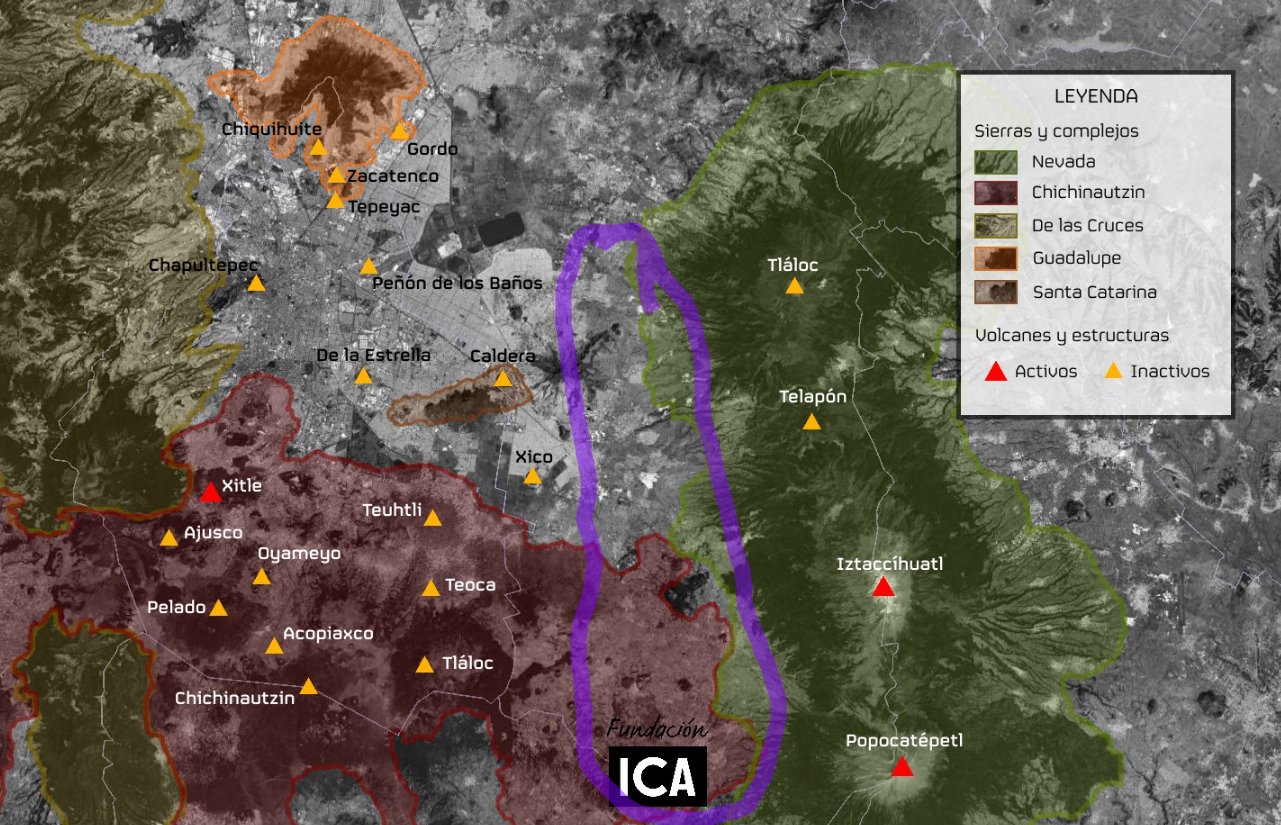
Karen lives in the "Valley of the Volcanoes," right in the middle of all this. Her daily life is framed by Mount Tláloc, Telapón, and the towering silhouettes of Popocatépetl and Iztaccíhuatl. Living under the shadow of these giants changes how you perceive the world. She started asking herself a question that feels almost like a sociological intervention: If I looked out an imaginary window 500 years ago, what would I see?
I love diving into theory and reviewing different authors. However, they should only ever serve as references, not as the definitive truth. The real map is the lived experience. When everything around us is fast and intangible, clinging to physical formats—holding a printed page or an analog record—isn't just nostalgia. It’s a way to preserve a certain artistic sensitivity. It grounds our personal rituals within the collective rush.
And this is where her work gets really interesting for me. These mountains aren't just scenery to the local communities; they are alive. There’s a beautiful, tragic legend about them—it’s like a Romeo and Juliet story—but it’s not just a myth. It’s a lived bond. You still have the Temperos, local men and women who interpret the volcano’s behavior through dreams and visions. They are the ones who know when the mountain is "roaring." To me, that’s collective memory refusing to be erased. It’s a form of resistance, viewing nature as a partner you communicate with, rather than a resource to be exploited.
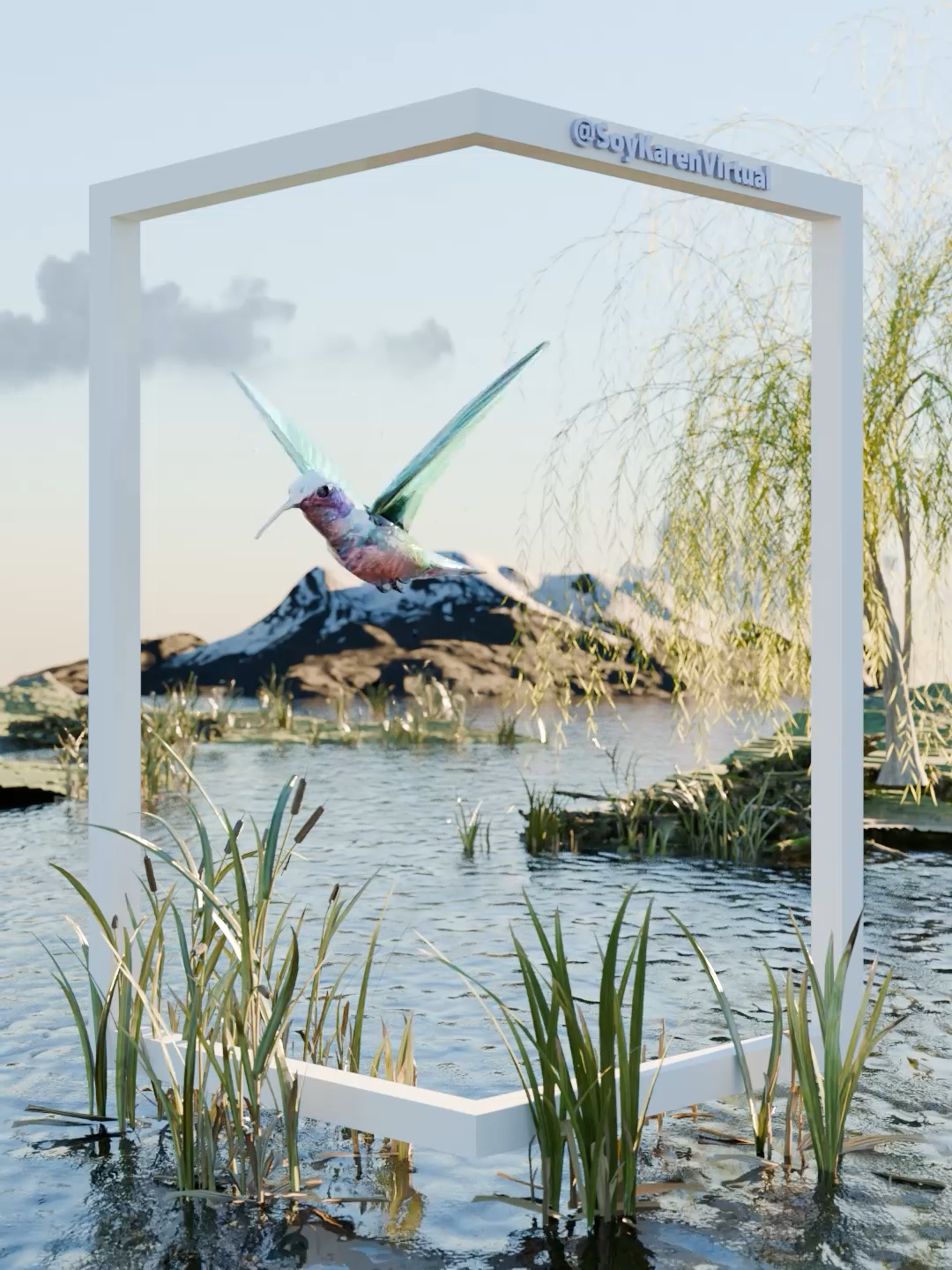
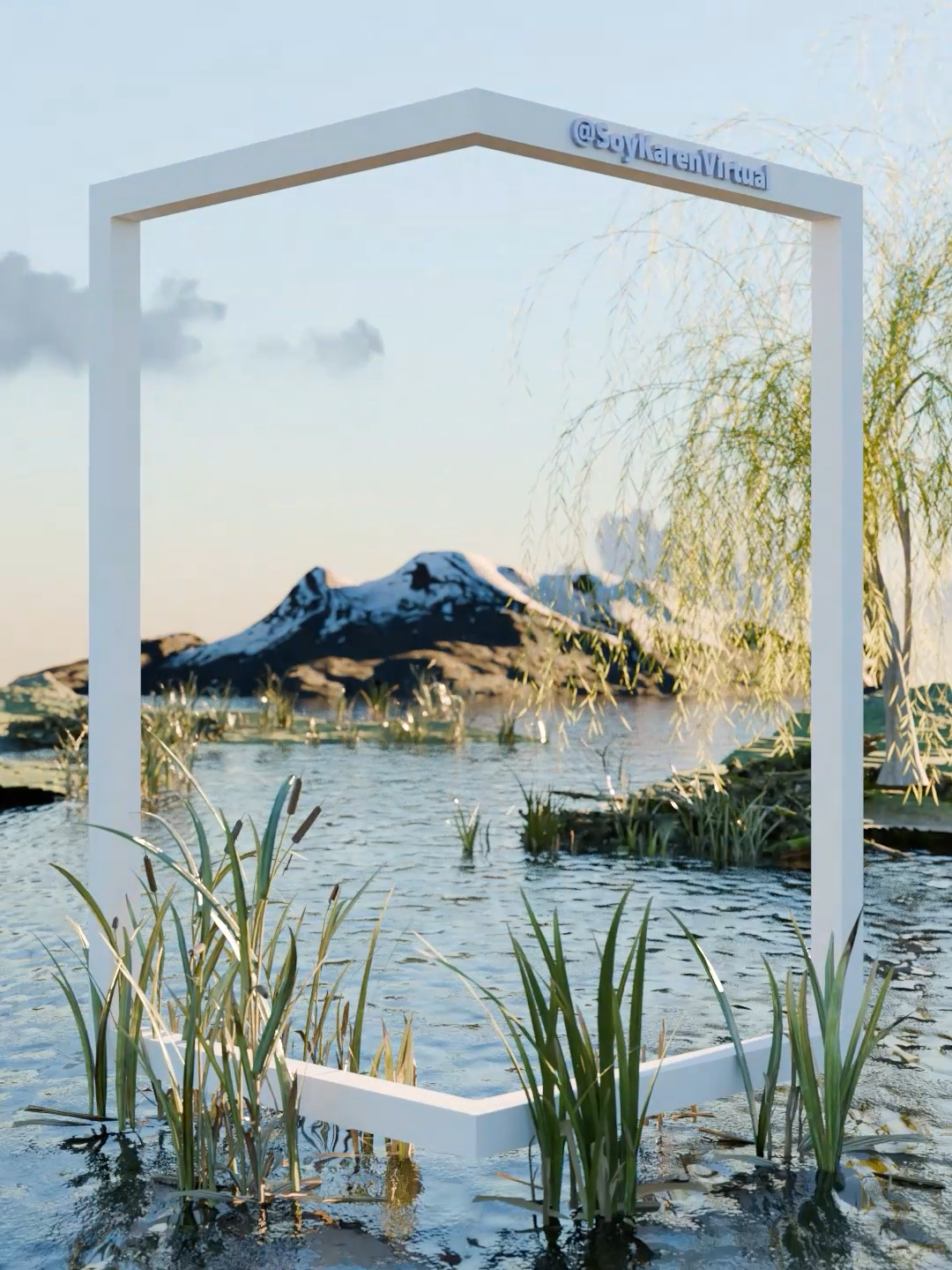
Inspired by some incredible 3D recreations of Tenochtitlan, Karen decided to open her own "window to time." She built an animated scene starring Iztaccíhuatl. And notice, she specifically chose her—a feminine entity—to bring that female presence into a landscape often dominated by masculine history.
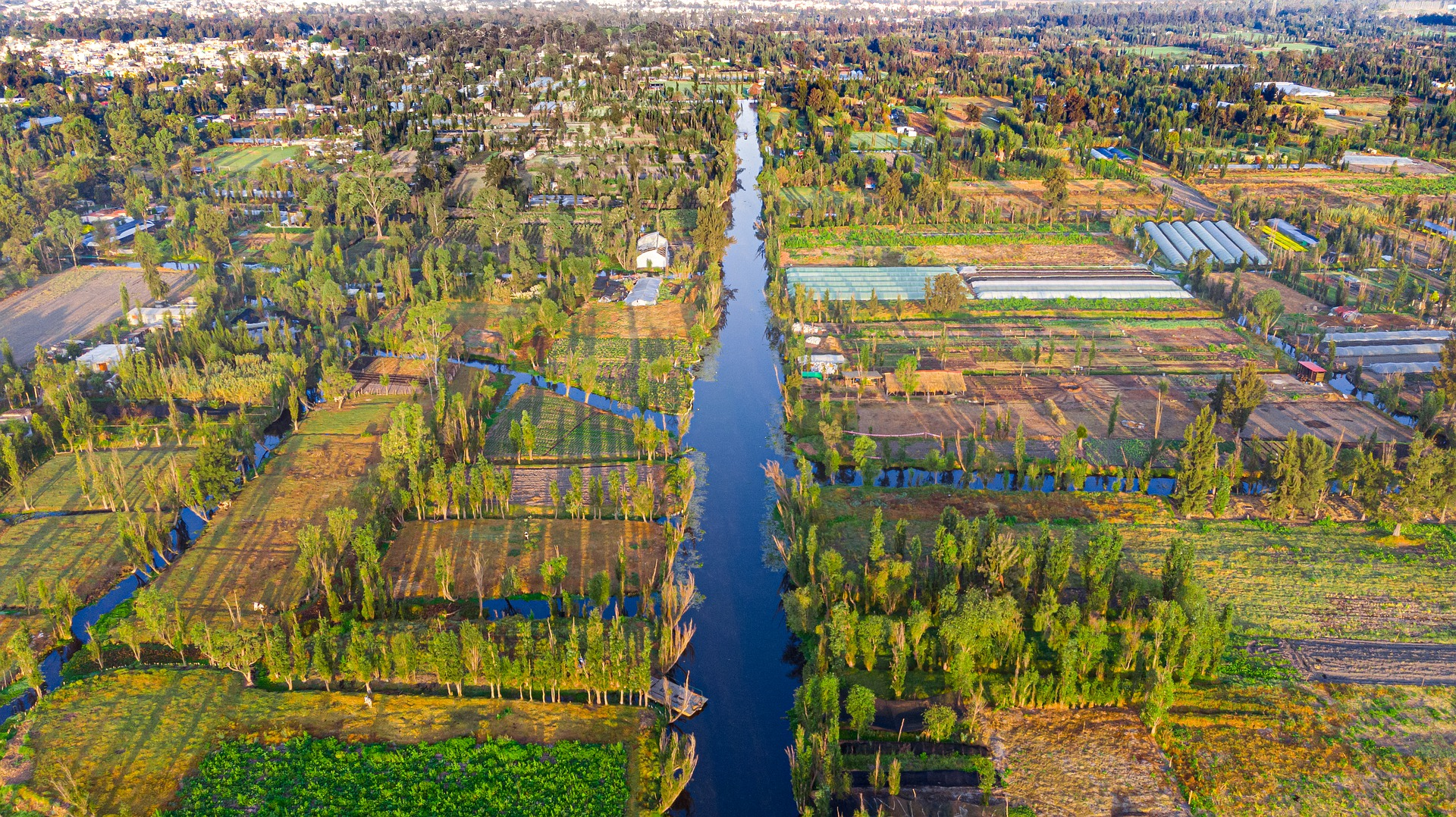
She filled the landscape with small islets and local vegetation, like the weeping willow, which carries so much history in the region. She painstakingly recreated the water surface and the chinampas—those ancient, floating farming islands that are nearly extinct, surviving only in pockets like Xochimilco. As a final, quiet touch, a hummingbird flutters through the scene, adding depth and evoking the spirit of Huitzilopochtli.
It’s haunting, really. She’s using 3D technology—a tool of the future—to force us to confront the past. It’s a reminder of what’s been lost, and it leaves me wondering: at what point did we decide that our ambition to build was worth more than the memory of the land we stand on?
About the Author
Looking at Karen’s overall trajectory, it helps to approach her practice through an ethnographic and sociological lens. Rather than focusing on isolated pieces, her entire methodology seems to function as a continuous living archive... a way of keeping a historical record of the present, while maintaining an open dialogue between past and future.
Her general approach is deeply rooted in historical inquiry, constantly crossed by a clear gender perspective and a strong anticolonial stance. In this sense, her creative process can be interpreted as a broad critical positioning in the world, rather than just an aesthetic choice.
Interestingly, her work constantly advocates for blurring the boundaries between the analog and the digital. Across her different projects, highly tactile techniques—like drawing, collage, mixed media, or embroidery—coexist quite naturally with video art, 3D modeling, video mapping, and motion graphics.
There is also a profound underlying reflection on digital spaces here. Karen understands virtuality not as an evasion of the physical world, but as a direct extension of it. This perspective naturally shapes her commitment to the ethical use of new technologies throughout all her audiovisual production.
This mix of theory and practice defines her path across Latin America. She has shared this broad vision in spaces like the Hypnos Festival (Chile), the Festival de la Luz (Guatemala), and Parallax (Mexico). Right now, she is channeling all that background into a collaborative online learning project for communities in the State of Mexico... bringing her tools and sociological perspectives into a real, collective dimension.